
Strong performance in the beauty and personal care (BPC) segment, margin gains, and expectations of a breakeven in the fashion business lifted sentiment for FSN E-Commerce Ventures (Nykaa). The consumer technology platform's stock rose 7.5 per cent on Friday, extending gains over the past week to more than 17 per cent. Most brokerages have upgraded the stock following its third-quarter (October-December/Q3) performance and higher profit expectations ahead.

The risk-reward for the Indian markets, Morgan Stanley said, is turning favourable.

'When I look at India's relative valuations, these are by far the lowest I have seen in my 35-year career.' 'The relative 12-month trailing performance is among the weakest I have seen, and foreign investor positioning is at a 16-17 year low.'

Information technology (IT) stocks ended at their lowest in nearly nine months after a fresh bout of selling, triggered by concerns over a recession in the US, the key market for domestic software exporters. A report by Morgan Stanley citing risks to growth also weighed on sentiment.

Jewellery majors Titan Company and Kalyan Jewellers reported robust Q4 FY26 results, with Titan's consolidated revenue surging 81 per cent year-on-year, largely propelled by a sixfold increase in bullion and digital gold sales. Despite strong top-line growth, Titan's gross and operating profit margins faced pressure due to the higher share of lower-margin gold products and increased marketing expenditure.

In a world fractured by uncertainty, India stands out for its policy consistency, paired with sustained ambition, points out Pritam Banerjee.

Global fund managers remain bullish on the Japanese stock markets, which is now their most preferred destination in the Asian region. Both Morgan Stanley and Jefferies in their recent reports, have cited their preference for the Land Of The Rising Sun, which is fast becoming the land of the rising equities, too.

Shares of apparel retail major Trent fell over 8.6 per cent to ~4,048 apiece at the close of trade on Tuesday. Trading near its 52-week low, the stock has shed about 43 per cent over the past year. Sentiment around the Tata group company weakened after it reported lower than expected revenue for the third quarter (October-December/Q3) of 2025-26 (FY26). Brokerages expect the stock to remain under pressure in the near term.

Billionaire Mukesh Ambani's Reliance Industries Ltd has spent $13 billion on acquisitions in the past five years across new energy, telecom, retail and media business to script a pivot away from core oil and petrochemicals business to clean energy and consumer facing verticals. Last week, Reliance bought oncology platform Karkinos Healthcare for Rs 375 crore, adding another stack to its diagnostic and digital healthcare ecosystem, Morgan Stanley said in a report.

The US' move to raise the tariff on most Indian goods to 50 per cent could drag India's GDP growth for FY26 by 35 to 60 basis points, according to various economists. One basis point (bp) is equal to 0.01 per cent.

Morgan Stanley expects the central bank to cut rates this week, 125 bps in cuts through 2015.

Food delivery and quick commerce (qcom) service application (app), Zomato, now commands a market capitalisation (mcap) higher than automobile giants Tata Motors and Bajaj Auto. Zomato, whose shares closed 1.18 per cent lower on Thursday at Rs 288.45 per share, has an mcap of Rs 2.78 trillion, according to BSE data. By comparison, Tata Motors' mcap stood at Rs 2.74 trillion, while Bajaj Auto's was Rs 2.5 trillion on the BSE.

With several $500 million-plus deals in the pipeline -- including ICICI Prudential AMC, Lenskart, PhonePe, Groww, PhysicsWallah, Meesho, Pine Labs, and Zepto -- investment bankers look poised for another year of hefty bonuses in 2025.

RBI's likely focus will shift back towards the resolution of non-performing loans in the banking system for reviving credit demand

The sweeping tariffs proposed across sectors by US President Donald Trump are scheduled to be imposed starting April 2, with most analysts worried about their impact on companies, and in turn the financial markets. Recently, the US administration signaled that it will impose sectoral tariffs on energy, pharmaceuticals, semiconductors, agriculture, copper, and lumber.

Analysts have sharply reduced cigarette maker ITC's earning estimates for the next two years, fearing a significant dent in the company's profitability and margins. This is owing to a steep hike in excise duty on tobacco by the government.

Indian information technology (IT) service providers are expected to deliver low single-digit sequential growth in the first quarter (April-June) of 2025-26 (FY26), even as macroeconomic uncertainties continue to persist due to the volatile geopolitical environment.

A higher-than-expected consumer price inflation (CPI) print for March in the US has dashed hopes of an interest rate cut by the US Federal Reserve (US Fed) in June. Analysts now expect the US central bank to start cutting rates in September, provided inflation remains in check and oil prices remain supportive. The markets, analysts believe, partially factored in this possibility.

The general elections in April/May 2024 are expected to add volatility to the Indian markets, keeping investors on their toes.

The big question is whether Trump is any longer in command of the situation. For all practical purposes, the war seems set to cascade as the US is preparing for a potential ground operation in Iran and threatens to destroy 'bridges next, then electric power plants', points out Ambassador M K Bhadrakumar.

In terms of magnitude of rate cuts, Morgan Stanley expects 50-100 basis points of policy rate cuts in 2015, depending on the inflation trajectory, which in turn will be dependent on the trend in commodity prices, fiscal deficit and rural wage growth.

The outcome of the general elections, the Morgan Stanley note says, has enough firepower to sway the markets on either side.
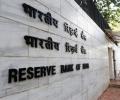
The central bank's next monetary policy review is scheduled for April 5. It had kept the policy rate unchanged in its February meeting on fears of inflation.

The benchmark National Stock Exchange Nifty has rallied 4 per cent, or 750 points, from this month's low to end at 19,732 on week ending November 17. Technical analysts say the market could consolidate around the current levels as it is nearing the resistance zone. "The near-term uptrend status of the market remains intact, but there is a possibility of some more consolidation or minor weakness for the Nifty in the next one to two sessions.

Domestic households are grossly underexposed to equities.

There are hopes of a turnaround in overall corporate earnings after six quarters of single digit growth.

Everyone is worried about inflation making their money worth less or even worthless.

The report further noted that inflation is expected to fall to 4.5 per cent by quarter ended March 2017.

In the mid-year monetary policy review on Tuesday, RBI, left the key interest rate unchanged but reduced cash reserve ratio by 0.25 per cent to infuse additional liquidity of up to Rs 17,500 crore (Rs 175 billion) into the system.

India hosts the event from a position of unprecedented strength with a string of titles under its belt.

ITC's move to demerge the hotel business into a new entity, ITC Hotels Ltd, is a step in the right direction and will allay investor's concerns on the company's capital allocation strategy in the medium-to-long term, said analysts at Morgan Stanley in a note. According to the company, the board of directors has approved in principle the demerger of the hotels business, wherein ITC will hold a 40 per cent stake in the new entity, and the remaining 60 per cent will be held directly by shareholders. The scheme of arrangement shall be placed for approval of the Board at its next meeting to be convened on 14th August 2023.

GST Reform 2.0, which trims tax slabs from four to two, signals a push for demand-led growth, and together with recent income tax cuts, sets the stage for sustained economic growth, experts said. The Goods and Services Tax (GST) Council on September 3 approved an overhaul of the indirect tax regime by taxing essentials at 5 per cent and other goods at 18 per cent. A new 40 per cent tax will be applicable on luxury and sin items.

Expenditure on new projects slowed down for the second quarter in a row amid an uncertain global environment and higher borrowing costs. There were new projects worth a cumulative Rs 3.26 trillion in the July-September period, according to data provided by project tracker Centre for Monitoring Indian Economy (CMIE). This figure is much less than Rs 4.39 trillion in the June quarter (Q1FY23) and Rs 8.46 trillion in the March quarter (Q4FY22).

Foreign investment in bonds issued by Indian corporates touched a 10-year high in May at 20,996 crore, driven by $3.35 billion fundraise by the Shapoorji Pallonji (SP) group, which saw infusion from Deutsche Bank, BlackRock, Morgan Stanley, Davidson Kempner, and Cerberus Capital, among others. The SP group sold three-year bonds, offering 19.75 per cent yield compounded annually and payable at maturity.
The under-leveraged nature of corporates will help reduce the impact.

India's gross domestic product growth has been on a steady decline since June 2011, when it stood at 8 per cent.

Morgan Stanley expects RBI to cut rates sharply rather than "dribble down".
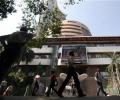
Global events will continue to be in the limelight, besides domestic policy.

Bank has cited trend of global easing and weak growth
Morgan Stanley said global factors are likely to remain a key influence on India's equity returns over the next one year.
